Why You Need a Property Report: 4 Things to Check Before Buying a Home in 2026
Why a U.S. Property Report Matters: 3 Key Takeaways
- Identify costs that may not be immediately visible in the listing.
- Estimate your financing options and potential monthly payment.
- Review property risks, HOA information, and transaction history in one place with My HomeCheck.
Are you planning to buy a home in the United States?
When setting a home-buying budget, many buyers focus primarily on the listing price and mortgage payment. However, the actual cost of owning a home includes much more than the mortgage.
According to an analysis by Zillow and Thumbtack, the average U.S. homeowner may pay approximately $15,900 per year in additional homeownership costs. That comes to about $1,325 per month on top of the mortgage payment. These costs include property taxes, homeowners insurance, and ongoing maintenance. Zillow’s analysis
Of course, these costs vary depending on the home’s location, condition, and community. That is why buyers should review not only the purchase price but also the property’s monthly costs, potential risks, and future maintenance needs before making a decision.🧐
.
Use Objective Data to Check Your “Real” Monthly Payment
The price shown on a real estate listing is not the total amount you will pay to own the home.
Even if a property appears to fit your budget, the actual monthly payment can increase once property taxes, insurance, HOA fees, utilities, and maintenance expenses are included.
Before buying a home, review the following costs:
.
Loaning.ai’s U.S. Property Report: My HomeCheck
If you have found a home online that you are interested in, the next step is to take a closer look at the property with My HomeCheck.
My HomeCheck organizes publicly available property information into a single report. It allows you to review the home’s basic details, estimated financing options, monthly costs, flood risk, HOA information, and past transaction history in one place. 😎

.
Four Things to Check with My HomeCheck
Check 1. Basic Property Information
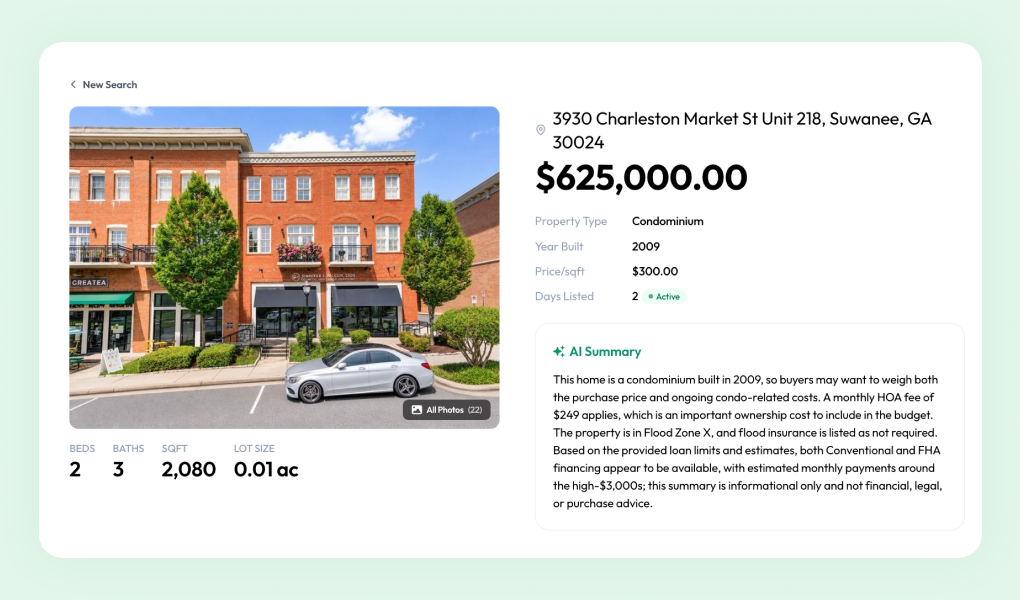
Start by reviewing the property’s basic information, such as its address, listing price, property type, year built, number of bedrooms and bathrooms, and square footage.
In the example shown in the report, the property is listed at $619,900. My HomeCheck presents the property’s basic information and listing details together, making it easier to confirm whether the home matches what you are looking for.
It also helps you review information that may be difficult to understand from the listing description alone.
.
Check 2. Financing Options and Estimated Monthly Payment
A home’s listing price alone does not tell you whether the property is financially manageable.
My HomeCheck provides an initial estimate of available financing options and potential monthly housing costs. This can help you compare loan scenarios and understand how your down payment, interest rate, taxes, insurance, and other expenses may affect your payment.
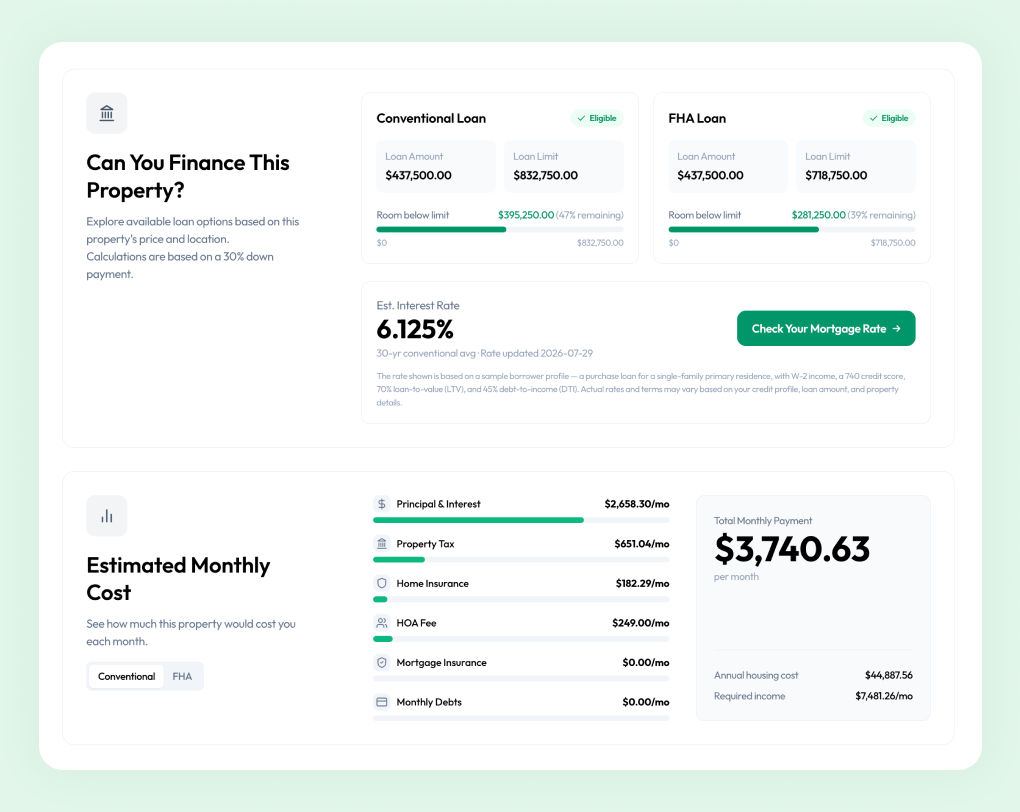
These figures are estimates rather than final loan terms. Your actual mortgage rate, loan eligibility, and monthly payment will depend on factors such as your credit profile, income, debt-to-income ratio, down payment, and lender requirements.
Still, reviewing an estimate early can help you determine whether a property is reasonably aligned with your budget before applying for financing.
.
Check 3. Ownership Risks and Additional Obligations: Flood Risk and HOA
A property’s location and community rules can create costs that are not immediately visible in the listing.
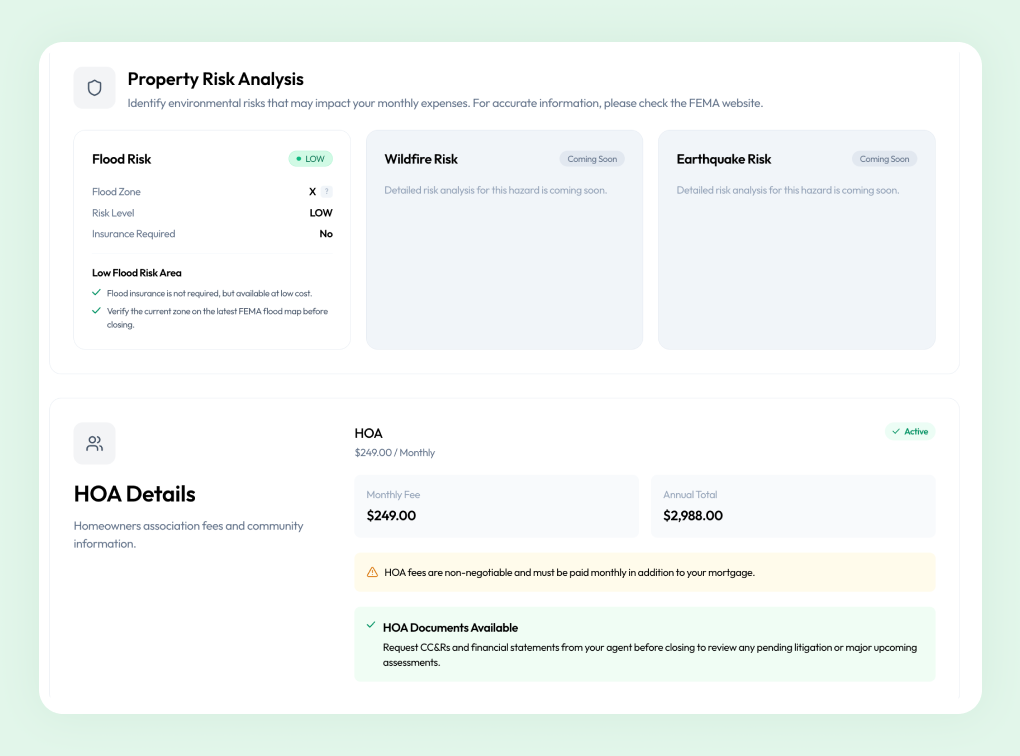
If a home is located in or near a flood-risk area, additional flood insurance may be required. Even when coverage is not mandatory, understanding the property’s exposure can help you evaluate possible insurance and repair costs.
My HomeCheck organizes available flood-risk information so you can identify whether further research or professional confirmation may be necessary.
You should also review the property’s HOA information. HOA fees may cover services such as common-area maintenance, landscaping, security, or community amenities, but the cost and coverage vary by community.
👀 What if the property has potential risks?
- Review the latest FEMA flood maps and local data
- Confirm whether flood insurance is required
- Check actual insurance availability and estimated premiums
- Review past flood records and relevant seller disclosures
🏠 Additional HOA Checklist
- CC&Rs and community rules
- Most recent budget and financial statements
- Reserve fund status
- Planned HOA dues increases
- Potential special assessments
- Pending litigation or major repair plans
Do not evaluate an HOA based only on whether the monthly fee appears high or low. An association with insufficient reserves may impose a special assessment on homeowners when major repairs or community improvements are needed.
The report can help you identify information that should be confirmed through official HOA documents before purchasing the home.
.
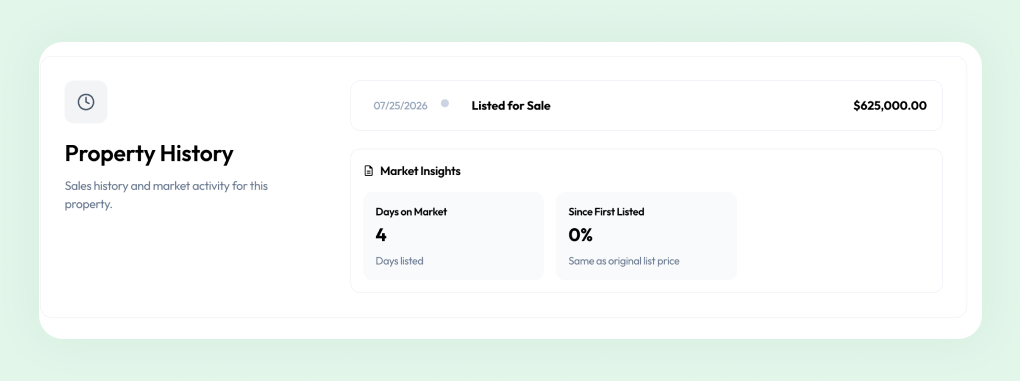
Check 4. Previous Transactions and Price Changes
A property’s transaction history can provide useful context for its current asking price.
Reviewing previous sale prices, transaction dates, and price changes may help you understand how the home’s value has changed over time and how the current listing compares with its own sales history.
For example, several transactions within a short period or frequent changes in the asking price may be worth investigating further. This information does not automatically mean there is a problem, but it can help you identify questions to ask the seller or real estate professional.
Past performance does not guarantee future appreciation. However, transaction history can provide additional context when evaluating whether the current price appears reasonable.
.
Found a Home You Like? Start with a U.S. Property Report 🚀
Before focusing only on the listing photos or asking price, take time to understand the home’s total monthly cost, financing options, ownership risks, HOA obligations, and transaction history.
With Loaning.ai’s My HomeCheck, you can generate a free U.S. property report that brings together:
- Basic property information
- Estimated financing options
- Estimated monthly housing costs
- Flood-risk and HOA information
- Previous transactions and price changes
Reviewing these details early can help you ask better questions, compare properties more confidently, and avoid unexpected costs later in the buying process. 😉