Mortgage Prequalification and Preapproval : What Homebuyers Need to Know Before Applying
When people begin thinking about buying a home, they often hear two different pieces of advice. Some are told to start touring homes first, while others are told to figure out financing before doing anything else. That is often where the confusion starts.
A better place to start is by understanding your budget before you begin seriously looking at homes. That is why learning about mortgage prequalification and preapproval early in the process matters.
In this guide, we’ll explain what these two terms mean, how they differ, and why they can shape both your budget planning and your home search.
.
Mortgage Prequalification and Preapproval: What They Mean?
Mortgage prequalification and preapproval are both early steps in the mortgage process, but they are not the same thing.
A mortgage prequalification is usually an initial estimate of how much you may be able to borrow. In many cases, it is based on information you provide about your income, debts, assets, and credit profile. Because it is often quicker and lighter, prequalification can be useful when you are just starting to explore your options.
A mortgage preapproval generally goes further. A lender may review your financial information more closely and may ask for documents such as pay stubs, bank statements, or tax forms. Because of that added review, preapproval is often considered a stronger step than prequalification.
In simple terms, prequalification helps you start planning, while preapproval helps you move closer to buying.
.
Mortgage Prequalification and Preapproval: What Is the Difference?
The main difference between mortgage prequalification and preapproval is the level of review behind the result.
With prequalification, the lender often relies mainly on the information you report. That makes it useful as an early estimate, but it may be less detailed and less reliable than a preapproval.
With preapproval, the lender usually reviews your finances more carefully. Because of that, the result may give you a clearer sense of what price range could realistically fit your situation.
That does not mean preapproval is a final loan commitment. Final approval still depends on later steps such as underwriting, property review, appraisal, and updated financial verification. Still, compared with prequalification, preapproval is generally the more serious step.
.
Mortgage Prequalification and Preapproval: Why Buyers Should Understand Both?
Buyers do not always need to think of mortgage prequalification and preapproval as an either-or decision. Both can be useful at different stages of the home-buying process.
So the question is not always which one is better overall. More often, the better question is which one makes more sense for your current stage.
.
Mortgage Prequalification and Preapproval: How They Affect Your Budget?
One of the biggest benefits of understanding mortgage prequalification and preapproval is that they help buyers set a more realistic budget.
Many people begin by browsing listings and choosing a home price that feels manageable. But affordability depends on more than the listing price. Your income, debts, down payment, estimated interest rate, taxes, insurance, and other monthly obligations all play a role.
A preapproval can help you narrow that range more realistically because the lender has reviewed more of your financial picture.
Instead of looking at homes far outside your realistic range, you can focus on properties that better match your actual borrowing position.
.
Mortgage Prequalification and Preapproval:
Why Does Preapproval Carry More Weight?
In practice, mortgage prequalification and preapproval do not always carry the same weight once you begin making offers.
Prequalification can be useful for planning, but preapproval is often more meaningful in a real transaction. That is because it may show that a lender has already reviewed your finances more carefully.
In a competitive market, that can matter. Sellers may view a preapproved buyer as someone who is more prepared to move forward. That does not guarantee that an offer will be accepted, but it can help strengthen your position.
In other words, preapproval is not just about numbers. It can also help signal seriousness and readiness.
.
Mortgage Prequalification and Preapproval: Is Preapproval Final Approval?
Mortgage prequalification and preapproval both help buyers prepare for the home financing process, but they serve different purposes. Prequalification can give you a rough starting point, while preapproval can provide a clearer picture of your budget and help you move forward with more confidence. Before you begin seriously shopping for a home, it helps to understand where you stand financially and which step fits your situation best.
.
Mortgage Prequalification and Preapproval: What Do Lenders Check?
When buyers start looking into mortgage prequalification and preapproval, they often want to know what information lenders may review.
Depending on the lender and the stage, the review may include:
- income
- employment status
- work history
- debts
- available assets
- estimated down payment
- credit-related information
For prequalification, some of this may be based mainly on borrower-provided information.
For preapproval, the lender may ask for supporting documents and take a closer look at your overall financial picture. The exact process can vary, so buyers should not assume that every lender handles prequalification and preapproval in the same way.
.
A Frequently Asked Questions
.
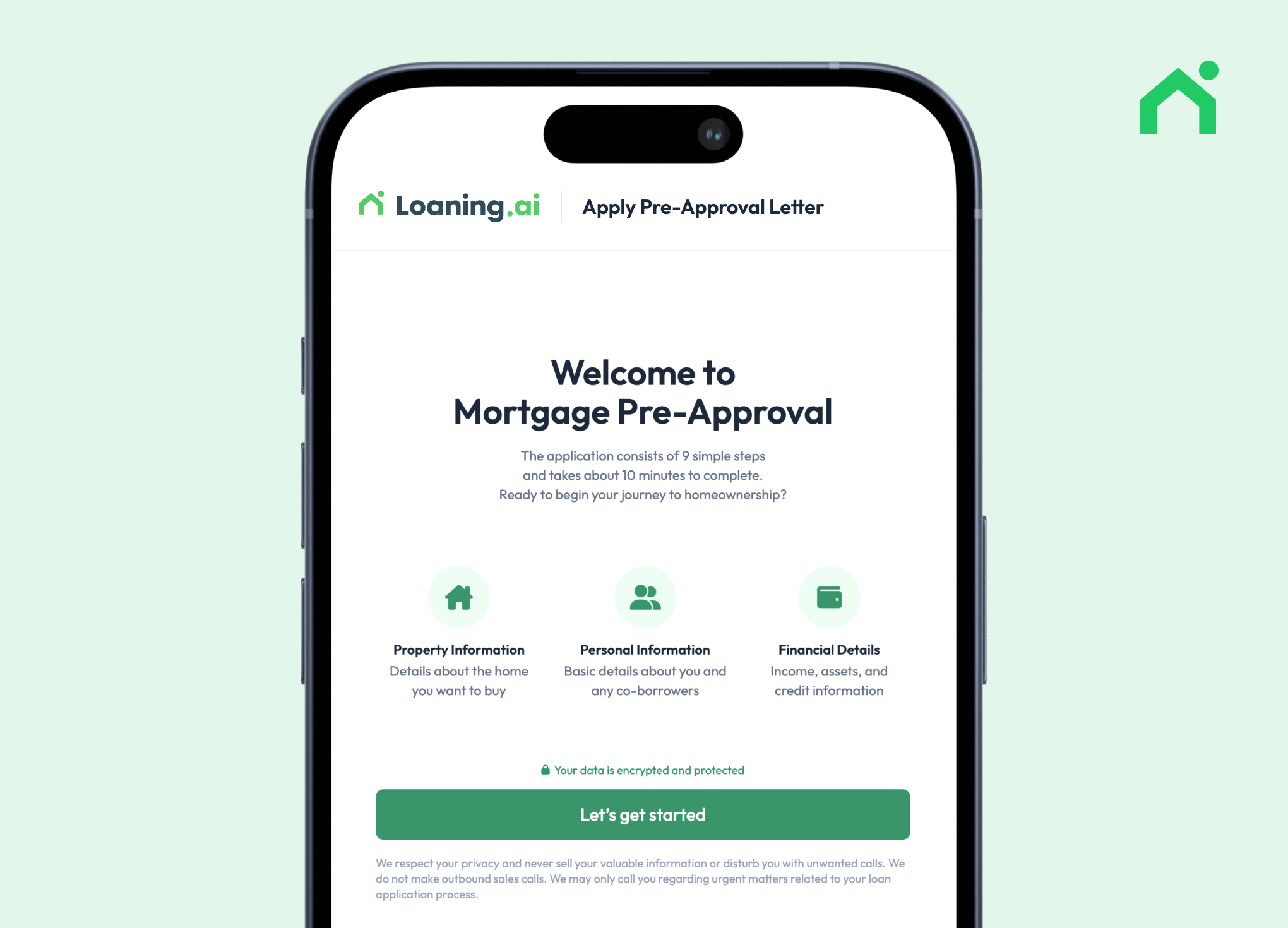
A Fast and Simple Pre-approval Process with Loaning.ai
As a direct lender in the U.S., Loaning.ai offers a system designed for Korean customers who may feel overwhelmed by complicated paperwork and procedures.
We explain in detail, in Korean, what documents are needed and approximately how much financing may be possible based on your current credit profile.
We quickly review your financial situation and issue a pre-approval so you do not miss out on a good property.
Beyond simple approval, we suggest a healthy borrowing plan that takes your DTI (debt-to-income ratio) into account.
.
.
.