Mortgage Rates May Stay in the Mid-6% Range Through 2027
Key Takeaway 🔎
- The consensus is not calling for a return to pandemic-era mortgage rates. Forecasts cluster in the mid-6% range, so buyers may benefit more from testing affordability and comparing complete loan costs than from trying to time a large, near-term rate decline.
Mortgage rates have pulled back slightly from their recent highs, but the broader outlook still points to an extended period of elevated borrowing costs. Major housing forecasters generally expect the average 30-year fixed rate to remain in the mid-6% range through the end of 2026, with only limited improvement projected in 2027.
.
Major forecasts point to a mid-6% plateau
Forbes Advisor’s review of current forecasts shows a relatively narrow range of expectations. Fannie Mae’s June 2026 Housing Forecast places the average 30-year fixed rate at about 6.4% through the remainder of 2026. The Mortgage Bankers Association forecast cited by Forbes expects roughly 6.5% in both the third and fourth quarters.
A June Reuters poll cited by Forbes also anticipates only a gradual decline, with rates around 6.4% in the third quarter and 6.3% in the fourth. These forecasts are not promises. They represent institutional estimates that can change as inflation, economic growth, energy prices and monetary policy expectations evolve.
.
Recent readings are above some forecast averages
The Forbes article uses a mid-June rate snapshot of 6.52%. More recent data show why borrowers should separate a forecast from a live quote. Mortgage News Daily’s daily index put the top-tier 30-year fixed rate at 6.76% on July 28, down 0.04 percentage point from the prior day after reaching 6.85% on July 23.
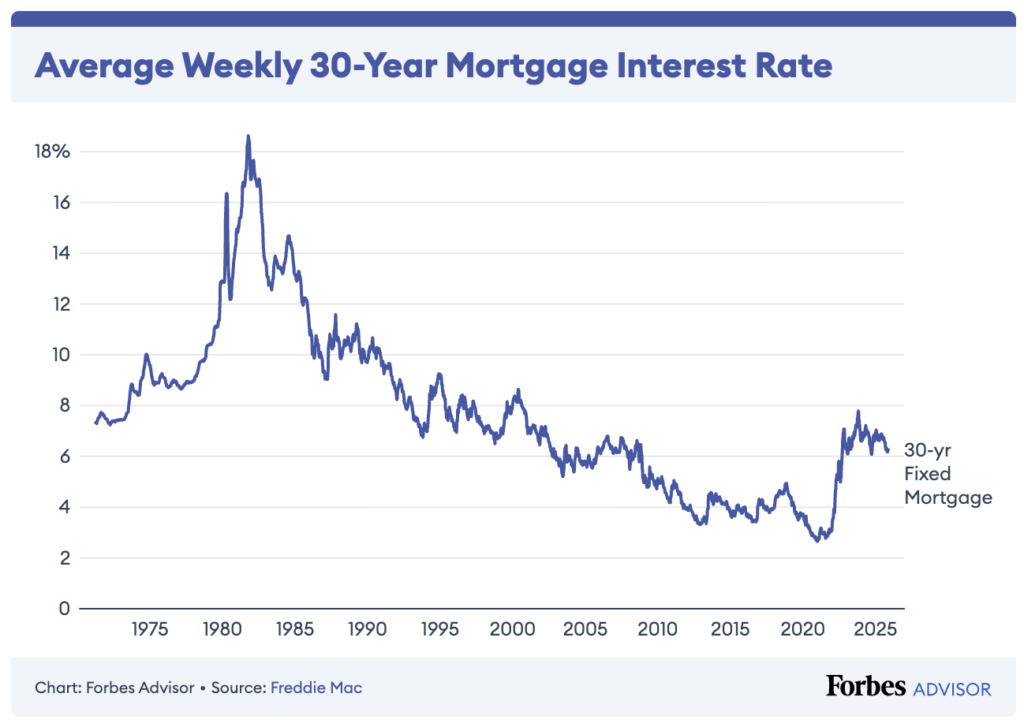
Freddie Mac’s weekly survey averaged 6.58% on July 23, up from 6.55% a week earlier. The daily and weekly figures differ because they use different timing and methodologies. Together, they show a small daily retreat within a broader July rise, not a decisive return to substantially lower rates.
.
Why mortgage rates may not fall quickly
The Federal Reserve does not directly set mortgage rates. Thirty-year mortgage pricing is more closely connected to the 10-year Treasury yield, mortgage-backed securities pricing, lender margins and expectations for future inflation and growth. Fed policy still matters because it can change the market’s view of those conditions, but a Fed hold or cut does not guarantee an equivalent move in mortgage rates.
Persistent inflation risk, resilient economic activity and geopolitical pressure on energy prices can all keep long-term yields elevated. A meaningful decline in mortgage rates would likely require clearer evidence that inflation is moving lower without a renewed shock to growth or energy markets.
.
What the forecast means for homebuyers
A forecast for stable mid-6% rates suggests that waiting for a dramatic drop may not be a complete homebuying strategy. Buyers can evaluate affordability using today’s payment, taxes, insurance and homeowners association costs, then treat any future refinancing opportunity as a possibility rather than an assumption.
Borrowers can also compare multiple lenders, review points and fees, ask how long a quote remains valid and understand the consequences of missing a rate-lock deadline. The rate actually offered will depend on credit score, debt-to-income ratio, down payment, loan-to-value ratio, property type, loan program and market timing.
.
.