Refinance Variable Rate to Fixed: Is It Possible?
✓ Understanding variable-rate refinance, made simple
✓ Three situations when access to cash becomes essential
✓ Cost breakdown and tips to reduce refinance fees
When buying a home in the U.S., many homeowners strategically choose a variable-rate mortgage.
With a lower initial interest rate than fixed-rate loans, this option often helps reduce housing costs and allows for more flexible financial planning.
However, as the fixed period ends and the rate adjustment date approaches, concerns naturally arise.
“Will my monthly payment keep increasing if rates go up?” This is a common worry among homeowners.
That’s why we prepared this guide.
Today, we’ll explain how you can refinance your existing variable-rate mortgage into a fixed rate—without selling your home or moving—and clearly walk you through the costs involved.
.
Variable Rate Refinance Guide: How to Respond to Market Changes
As your rate adjustment period approaches, there are two main strategies to consider, depending on your financial goals and housing plans.
This approach means continuing with your current variable-rate refinance mortgage.
When market rates decline, you can immediately benefit from lower interest costs.
This option may still be attractive if you expect rates to fall or if you plan to sell or move within a few years and prioritize short-term efficiency.
This strategy involves refinancing into a fixed-rate mortgage.
While the fixed rate at the time of conversion may be slightly higher than your current variable rate, your monthly payment will remain unchanged for up to 30 years—regardless of how much market rates increase. This option is especially appealing for homeowners planning long-term residency or those who want to completely eliminate budget uncertainty.
.
Cash-Out Refinance: When Is Switching to a Fixed Rate the Right Choice?
A fixed-rate refinance may be a better solution if certainty becomes more important to you in the following situations:
① When You Want Predictable Housing Costs
The biggest advantage of a fixed rate is predictability.
Your mortgage payment stays the same next month, next year, and even ten years from now—making long-term financial planning much easier.
② When You Want to Eliminate Rate Increase Risk
No one can perfectly predict economic conditions.
Switching from a variable rate to a fixed rate acts as a form of protection—locking in your rate so future market increases won’t affect your payment.
③ When Rate Adjustment Stress Becomes a Burden
There’s no need to track economic news every year worrying about rate changes.
Your home should be a place of comfort. Fixing your rate helps remove financial stress and lets you focus on what matters most.
.
How Much Does It Cost to Refinance from a Variable to a Fixed Rate?
“Isn’t refinancing expensive?”
Typically, refinance costs range from 2–5% of the loan amount, but with the right strategy, these costs can be managed.
Loaning.ai discloses all costs 100% transparently, in compliance with consumer protection regulations.
| Category | Current Loan(Before) | Option 1 |
Best Balance
Option 2(Recommended)
|
Option 3 | Option 4(No Out-of-Pocket) | Option 5(Cash Back) |
|---|---|---|---|---|---|---|
| Interest Rate(Rate) | 7.125% | 5.500% | 5.625% | 5.750% | 5.875% | 5.990% |
| APR | 7.125% | 5.547% | 5.634% | 5.762% | 5.840% | 5.918% |
| Monthly Payment(P&I) | $4,716 | $3,975 | $4,030 | $4,085 | $4,141 | $4,192 |
| Monthly Savings | – | $741 | $686 | $631 | $575 | $524 |
| Net Cost | – | $3,808 | $708 | $1,008 | -$2,692(receive cash) | -$5,692(receive cash) |
| Break-Even Period(BEP) | – | 5.1 months | 1.0 month | 1.6 months | Immediate savings | Immediate savings |
| Total Savings(30년) | – | $266,760 | $246,960 | $227,160 | $207,000 | $188,640 |
Actual rates, fees, and payments vary based on credit score, LTV, income, market conditions, and lender guidelines.
: These are pure administrative fees charged by the lender to process your loan.
✓ Underwriting Fee: The cost of thoroughly reviewing your income, assets, and credit.
✓ Processing Fee: The cost of preparing, collecting, and reviewing all required documents.
: Mandatory fees paid to external professional service providers, not the lender.
✓ Appraisal Fee: Paid to a licensed appraiser to determine the property’s market value. (Typically $600–$1,000)
✓ Credit Report Fee: Charged by credit bureaus for accessing your credit report.
: Required fees to verify and protect property ownership.
✓ Title Insurance: Insurance that protects against ownership disputes. (Typically $600–$1,000)
✓ Escrow / Settlement Fee: Covers secure handling and transfer of funds during closing.
: Mandatory fees paid to the state or county.
✓ Recording Fees: Fees for officially recording the new loan with the local government.
Use lender credits. By accepting a slightly higher interest rate, you can receive credits from the lender to fully offset the closing costs listed above. This is one of the smartest ways to secure liquidity without paying any cash upfront.
✓ Home Price: $1,000,000.00 / Loan Amount: $700,000.00
✓ 30-Year Fixed, Level Payment, U.S. Citizen
✓ Tax returns: 2 years or more, Full Documentation
✓ Property Type: Single Family, Purchase, Primary Residence
✓ Credit Score (FICO): 740 / DTI: 45% / LTV: 70%
* All figures shown in this content (rates, monthly payments, credit amounts, and break-even points) are illustrative simulations and may differ at the time of actual loan application. Results may vary depending on individual credit profile, financial situation, and market conditions. This content does not constitute financial advice.
Affiliate fees may apply when using Loaning.ai. Final decisions should be made at your own discretion after consulting with a licensed professional.
.
Frequently Asked Questions
Some mandatory costs—such as appraisal and recording fees—do apply.
However, Loaning.ai’s lender credit options can significantly reduce or even eliminate out-of-pocket expenses. Many clients choose a No Out-of-Pocket option to maintain liquidity.
Switching to a fixed rate is less about short-term savings and more about eliminating future uncertainty. The peace of mind from removing rate increase risk can outweigh a small rate difference today.
It’s recommended to start reviewing options about six months before your fixed period ends. Planning ahead allows you to monitor market conditions and choose the right timing with expert guidance.
.
Stay Flexible as Your Life Changes
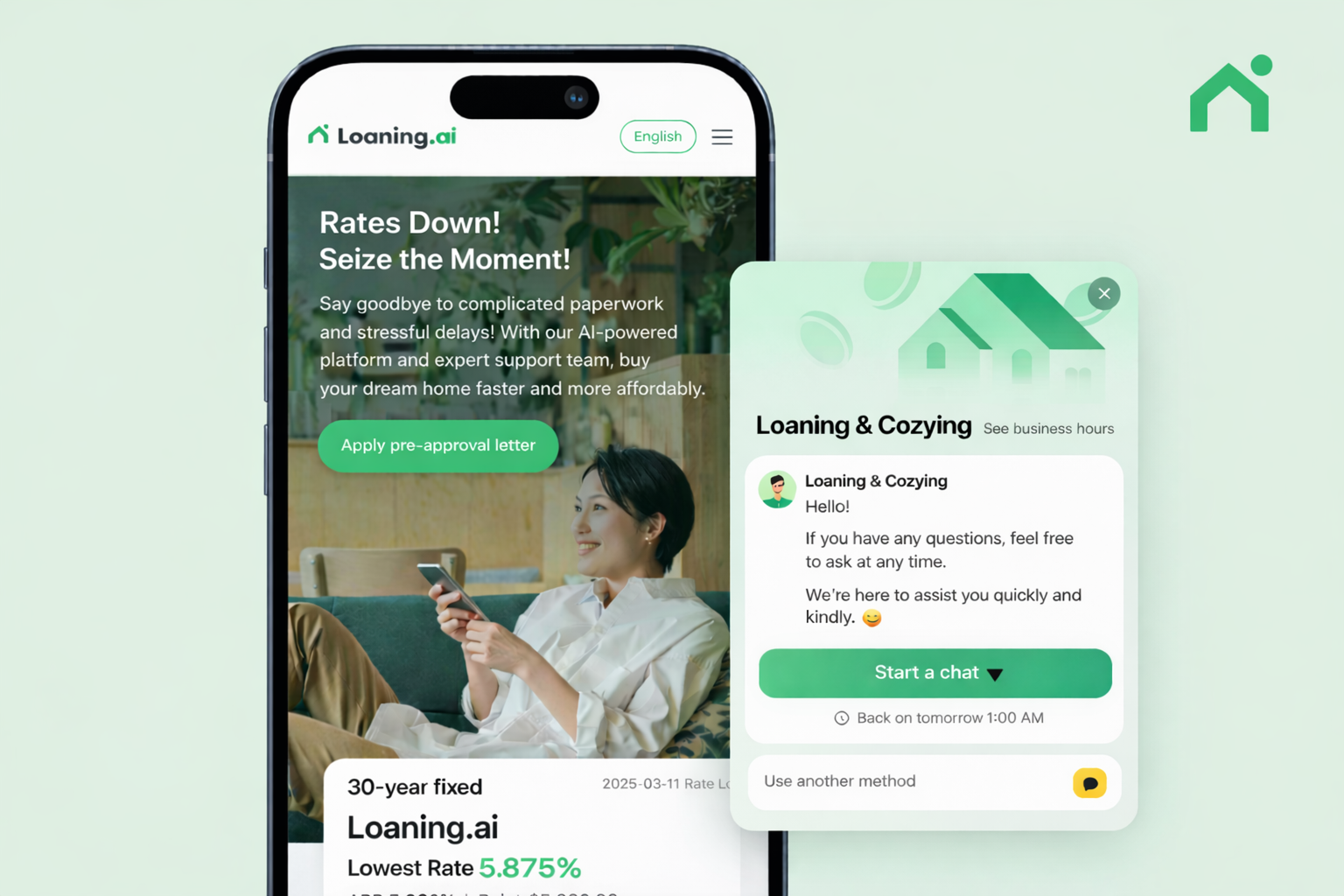
Life plans evolve, and unexpected events happen.
Loaning.ai provides personalized solutions tailored to each stage of your life.
If you’re wondering, “What’s the best rate strategy for my situation?”
Feel free to reach out anytime.