Trump Calls for Lower Rates as Warsh Faces a Divided and Uncertain Fed
Key Takeaway 🔎
- Trump is publicly demanding lower rates, but the decision belongs to the full FOMC.
- For mortgage rates, the degree of division inside the committee and the bond market’s inflation response may matter more than any one official’s preference.
President Donald Trump again pressed for lower U.S. interest rates while voicing support for Federal Reserve Chair Kevin Warsh. The comments came just before the Fed’s July policy meeting, leaving markets focused on whether Warsh’s personal views will align with the decision of the full Federal Open Market Committee.
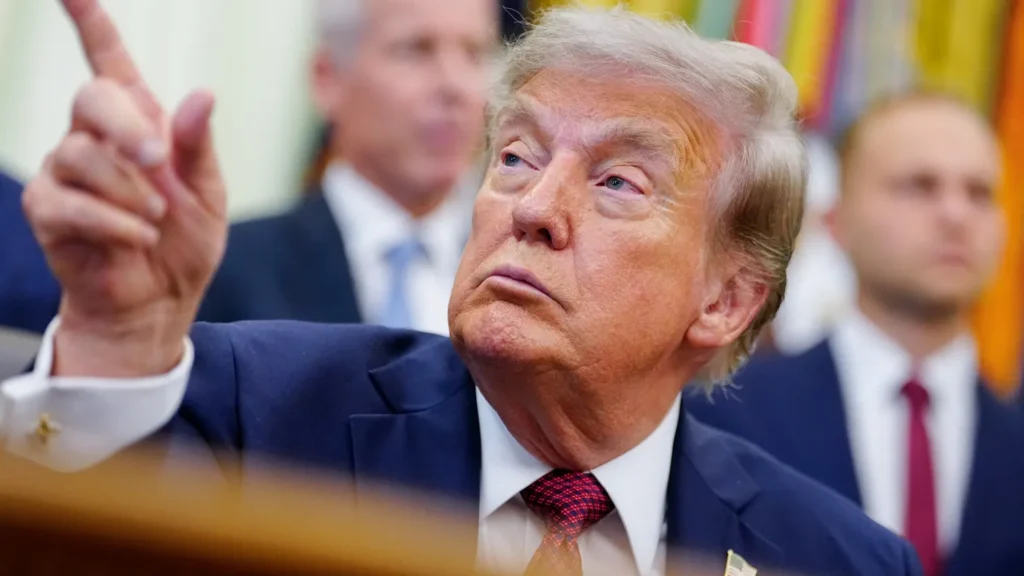
Bonnie Cash | Bloomberg | Getty Images
.
Trump praised Warsh and criticized other Fed officials
According to CNBC, Trump spoke with reporters aboard Air Force One on Monday and described Warsh in highly positive terms. He said the chair wanted to make the right decision and suggested that he understood what Warsh wanted to do. Trump also repeated his view that U.S. interest rates should be among the lowest in the world.
Trump acknowledged that Warsh cannot decide policy alone, but characterized other members of the Fed’s Board of Governors as political and suggested that some may have bad intentions. Those comments reflect the president’s assessment; they do not establish the motives behind other officials’ policy positions.
.
The chair does not set interest rates alone
The target range for the federal funds rate is determined by a vote of the FOMC. The committee has 12 voting members: the seven members of the Federal Reserve Board, the president of the Federal Reserve Bank of New York and four other Reserve Bank presidents who vote on a rotating basis.
The chair has significant influence over the agenda, debate and public communication, but cannot set policy unilaterally. Even if the president believes Warsh favors lower rates, the final decision depends on how the committee as a whole evaluates inflation, employment, growth and financial conditions.
.
Markets still cannot read Warsh’s likely vote
Futures markets priced in roughly a one-in-three chance of a hike ahead of the meeting. That degree of uncertainty is unusual after years in which the Fed generally guided expectations before a decision.
Warsh has made several public appearances since becoming chair but has provided limited guidance about this specific meeting. His repeated support for the Fed’s 2% inflation target has led some observers to view him as an inflation hawk.
Other economists focus on Warsh’s belief that AI could raise productivity, contain inflation and support a lower path for interest rates. That interpretation could place him closer to Trump’s preferred direction than some of his colleagues, but it remains an inference about Warsh’s economic framework rather than a confirmed signal of his vote.
.
Political pressure can make the long-term rate response more complicated
A policy-rate cut usually eases financial conditions, but mortgage rates do not always move lower immediately. If bond investors see a cut as a response to weaker growth, long-term yields may fall. If they believe the Fed is becoming less committed to controlling inflation, expected inflation and Treasury yields could rise instead.
For homebuyers, the most important signals will come from the FOMC statement, Warsh’s press conference and the subsequent reaction in Treasury and mortgage-backed securities markets. Political comments can increase volatility, but an individual mortgage quote ultimately reflects market pricing and borrower-specific loan details.
.