New Home Sales vs Existing Home Sales
Understanding U.S. new home sales is important if you plan to sell a property in the United States. The process usually includes preparation, pricing strategy, marketing, negotiations, and closing, all of which occur in a structured sequence.
If you are planning to sell a home in the U.S., it is important to understand how new home sales differ from the process of selling an existing home. While both involve real estate transactions, the sales structure, contract terms, and negotiation process can differ significantly.
In this guide, we explain the new home sales, how it differs from existing home sales, and the main costs involved in selling a property.
Comparison of New Home Sales Structures
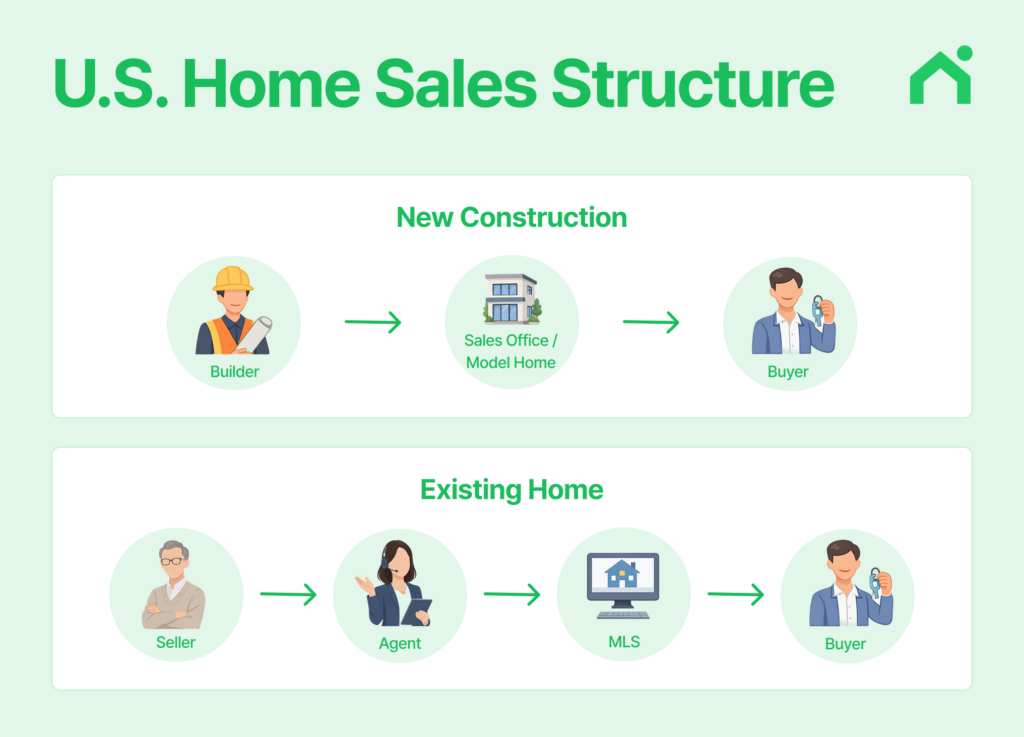
The diagram above shows a simplified version of the typical home sales structure in the U.S. real estate market. The actual transaction process may vary depending on the specific situation.
In the United States, New Construction homes and Existing Homes (also called resale homes) typically follow different sales structures.
Generally, U.S. new home sales refer to newly constructed homes that are sold by the builder for the first time. In these cases, the builder typically manages the sales process directly, and transactions often take place through a sales office or model home located within the development.
In contrast, when an individual homeowner sells a property they already own, the transaction is categorized as an existing home sale. Even if the property is relatively new, once it is resold by a private owner it follows the standard resale process.
For this reason, in the U.S. real estate market, transactions are often classified not by the age of the home but by who is selling the property and how the sale is conducted.
New Home Sales Process
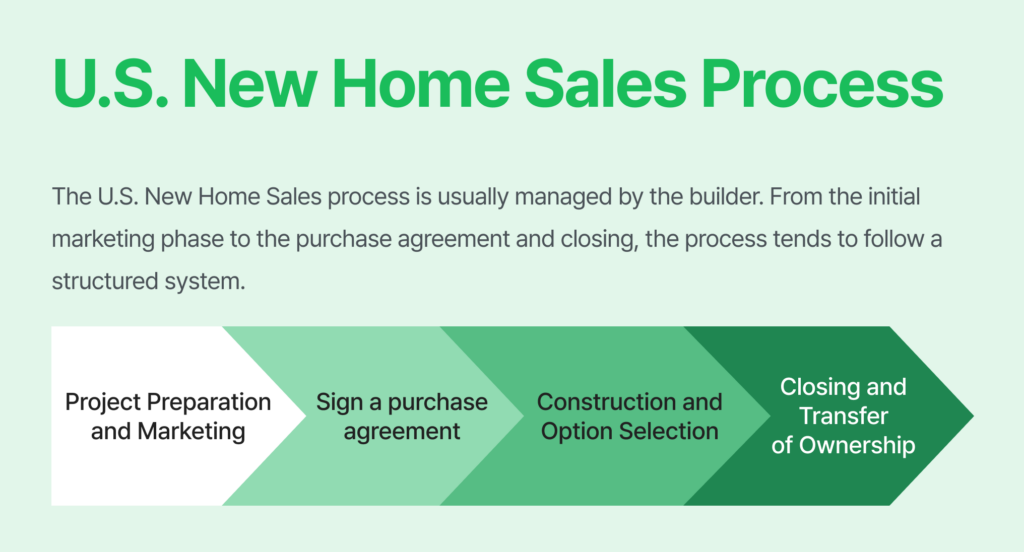
The U.S. New Home Sales process is usually managed by the builder. From the initial marketing phase to the purchase agreement and closing, the process tends to follow a structured system.
1. Project Preparation and Marketing
Before launching a new housing project, builders typically conduct market research and determine the pricing strategy. Afterward, they begin marketing the homes through model homes and online promotion.
Common marketing methods include:
- Model home tours
- Dedicated project websites
- Online advertising
- Community promotion
Buyers can explore the project by visiting the model home or reviewing information online.
2. Purchase Agreement
Once a buyer decides to move forward, they typically sign a builder purchase agreement. In U.S. new home sales, the contract is usually provided by the builder.
At the time of signing the contract, buyers typically submit a deposit.
Although price negotiations are sometimes limited in U.S. new home sales, builders may offer incentives such as:
- Upgrade options for finishes or appliances
- Closing cost assistance
- Mortgage rate incentives
3. Construction and Option Selection
If the home is still under construction, buyers may be able to select various interior options.
Examples include:
- Flooring materials
- Kitchen cabinets
- Lighting fixtures and interior upgrades
Before the buyer moves in, a Final Walkthrough is usually conducted to verify the condition of the property.
4. Closing and Transfer of Ownership
Once construction is completed and all contract conditions are satisfied, the transaction proceeds to the closing stage.
Typical steps during closing include:
- Signing final documents
- Settlement of costs
- Recording the property transfer
- Key handover
After closing is complete, ownership of the newly built home is officially transferred to the buyer.
Existing Home Sales Process
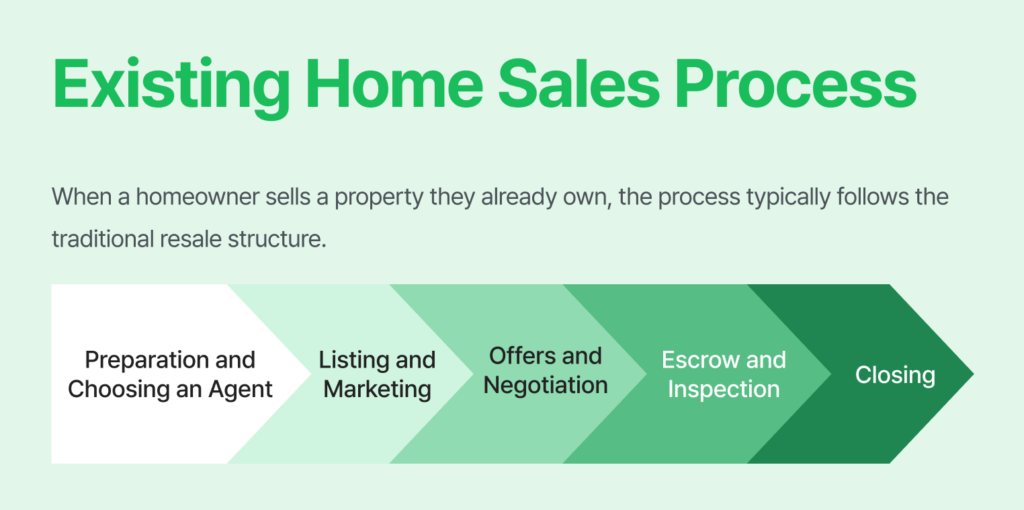
When a homeowner sells a property they already own, the process typically follows the traditional resale structure.
1. Preparation and Choosing an Agent
Before listing a property, sellers typically develop a sales plan and prepare the home for the market. Pricing strategy and estimated selling costs are important considerations during this stage.
Most sellers work with a real estate agent. In the U.S., it is common for the seller and the buyer to each have their own agent. The listing agent helps determine the appropriate market price and develops a marketing strategy.
Preparing the home for sale may include:
- Cleaning and organizing the house
- Minor repairs or repainting
- Decluttering unnecessary items
- Home staging
Home staging helps make the property appear more spacious and attractive to buyers, often increasing the chances of a faster sale.
2. Listing and Marketing
Once the property is ready, it is officially introduced to the market.
Typically, the home is listed on the Multiple Listing Service (MLS), a database used by real estate agents. Listings on the MLS are then distributed to major real estate platforms such as Zillow, Redfin, and Cozying.ai, making the property visible to buyers.
Although MLS listings mainly include existing homes, some new construction projects may also appear in the system.
Marketing activities during this stage may include:
- Professional photography
- Detailed listing descriptions
- Virtual tours or 3D tours
- Open houses
Open houses allow potential buyers to visit the property in person. Sellers often leave the home during these events while the listing agent manages the showings.
3. Offers and Negotiation
When a buyer is interested in the property, they submit an offer.
The seller reviews several factors when evaluating offers, including:
- Purchase price
- Down payment amount
- Contract contingencies
- Proposed closing timeline
If the price or terms are not acceptable, negotiations may occur through a counteroffer.
Once a contract is signed, the buyer usually deposits Earnest Money into an escrow account within one to three days. This deposit later becomes part of the buyer’s down payment.
4. Escrow and Inspection
After the contract is finalized, the transaction enters the escrow process, where a neutral third party manages the transaction and ensures that contract conditions are fulfilled.
Escrow typically lasts 30 to 45 days.
During this period, several important steps occur:
- Home Inspection
A professional inspector evaluates the condition of the property. If significant issues are discovered, buyers may request repairs or negotiate a price adjustment. - Appraisal
The buyer’s lender assesses the value of the home. If the appraisal comes in lower than the purchase price, further negotiations may be necessary. - Disclosure
Sellers are legally required to disclose known defects and past repairs related to the property.
5. Closing
Once all conditions are satisfied, the transaction proceeds to closing.
Before closing, the buyer performs a Final Walkthrough to confirm the home’s condition. After that, final documents are usually signed at a title company.
Typical closing steps include:
- Signing final documents
- Settlement of closing costs
- Recording the transfer of ownership
- Key handover
At this stage, the seller typically pays the agent commission and certain closing costs. After all expenses are deducted, the remaining proceeds from the sale are transferred to the seller through escrow settlement.
Major Costs When Selling a Home in the U.S.
Selling a home in the United States involves several potential costs.
1. Real Estate Agent Commission
The largest cost is usually the real estate commission.
This fee is generally calculated as a percentage of the final sale price.
2. Closing Costs
Sellers may also be responsible for certain closing costs, including:
- Title fees
- Administrative processing fees
- Recording fees
Seller closing costs are typically around 1–3% of the home price, although this can vary by location.
3. Repair and Preparation Costs
Before listing the home, sellers may incur expenses related to preparing the property for sale, including:
- Repair work
- Interior preparation
- Home staging
- Professional photography
These preparations can help make the property more attractive to potential buyers.
Understanding the U.S. New Home Sales Process

Selling a home in the United States involves much more than simply listing a property. Preparation, pricing strategy, marketing, negotiation, and closing all play important roles in the outcome of the sale.
Because U.S. new home sales and existing home sales follow different structures and procedures, understanding both processes can help sellers make more informed decisions.
If you are preparing to sell a home, reviewing market conditions, developing a sales strategy, and estimating potential costs in advance can help make the process smoother.
👉 Learn more about home buying and mortgage guidance on Loaning.ai.