U.S. Property Taxes: What Homeowners Need to Know
When purchasing a home in the United States, many buyers focus first on the down payment and monthly mortgage payment. However, once you own a home, there are several ongoing costs to consider. Two of the most important expenses are U.S. property taxes and home maintenance costs.
In the United States, homeowners must pay property taxes every year. In addition, homeowners must also pay for insurance, maintenance, and sometimes community management fees. These costs may not seem significant before buying a home, but over time they can become a substantial financial commitment.
For this reason, anyone planning to buy a home should understand not only the home price but also U.S. property taxes and long-term homeownership costs.
What Are U.S. Property Taxes?
U.S. Property Taxes are annual taxes imposed on people who own homes or real estate.
Unlike federal taxes, these taxes are primarily collected by local governments, including counties, cities, and school districts. The revenue from property taxes is typically used to support important community services such as:
- Public school systems
- Local roads and infrastructure
- Fire and police services
- Public facilities and community programs
In other words, property taxes serve as a major source of funding for local governments and public services.
Once you purchase a home and become the legal owner of the property, you will be required to pay property taxes annually based on the value of that property.
How Are U.S. Property Taxes Calculated?
U.S. property taxes are generally determined by two key factors.
1. Assessed Property Value
Local governments evaluate the value of the property. This assessed value becomes the basis for calculating the tax.
2. Local Property Tax Rate
Each city or county sets its own property tax rate.
The basic calculation works as follows:
Assessed Property Value × Local Tax Rate = Annual Property Tax
For example:
| Home Value | Tax Rate | Annual U.S. Property Taxes |
|---|---|---|
| $500,000 | 1% | $5,000 |
| $500,000 | 2% | $10,000 |
Because tax rates vary by location, property taxes can differ significantly even for homes with the same value.
Homeownership Costs in Major Regions
Homeownership costs in the United States depend not only on the home price but also on property taxes, insurance costs, and maintenance expenses. In some areas, these costs can reach tens of thousands of dollars per year.
Below are examples of average annual homeownership costs in selected regions.
| Region | Average Annual Homeownership Cost |
|---|---|
| Hawaii | $34,573 |
| California | $32,262 |
| New Jersey | $29,751 |
| Washington | $27,444 |
| New York | $24,381 |
| San Francisco | $22,781 |
In general, areas with higher property values tend to have higher U.S. Property Taxes as well as higher maintenance costs. This is why buyers should consider the total cost of homeownership, not just the home price or mortgage payment.
Why U.S. Property Taxes Vary by State
One important feature of property taxes is that they are primarily managed by local governments rather than the federal government.
As a result, tax levels vary depending on several factors, including:
- Local government budget structures
- Public school funding needs
- Regional policies
- Local real estate market conditions
For example, some areas maintain relatively low tax rates, while others may have higher rates to support strong public school systems or extensive local services.
Because of this, buyers should always check the property taxes in a specific area before purchasing a home.
Major Ongoing Home Maintenance Costs
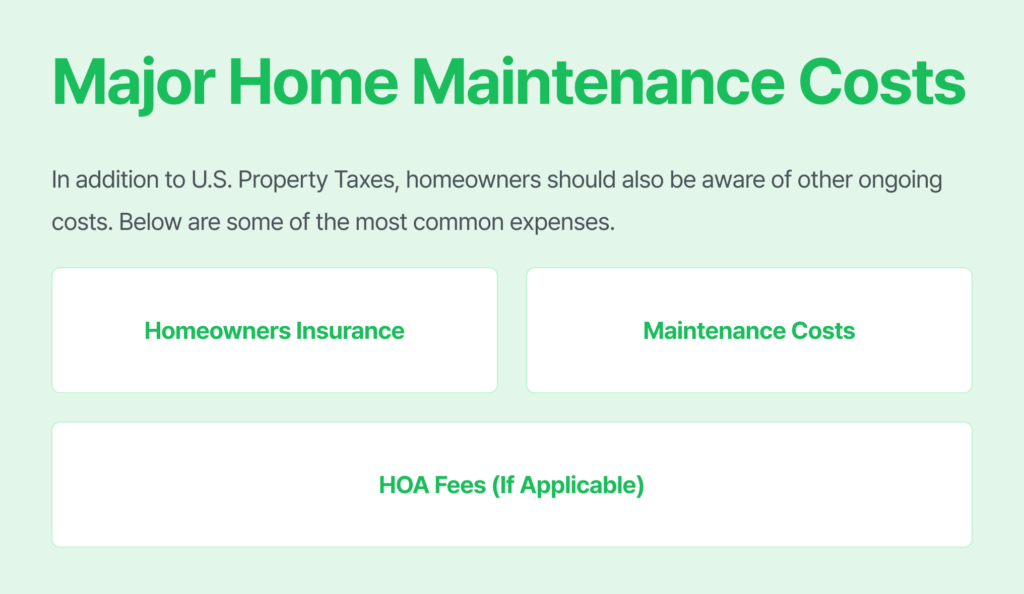
In addition to U.S. property taxes, homeowners should also be aware of other ongoing costs.
Below are some of the most common expenses.
1. Homeowners Insurance
Homeowners insurance protects the property against risks such as fire, natural disasters, and accidents.
Many mortgage lenders require borrowers to maintain homeowners insurance as a condition of the loan.
2. Maintenance Costs
Owning a home requires regular upkeep and repairs.
Common maintenance expenses include:
- Roof repairs
- Plumbing issues
- Electrical system maintenance
- Exterior painting and structural repairs
- HVAC system servicing
Financial experts often estimate that homeowners should budget around 1% of the home value per year for maintenance.
3. HOA Fees (If Applicable)
Some residential communities charge HOA (Homeowners Association) fees.
These fees typically cover the maintenance of shared community facilities such as:
- Community management
- Swimming pools
- Landscaping
- Shared recreational facilities
HOA fees can range from tens to hundreds of dollars per month, depending on the community.
Why Total Homeownership Costs Matter
Many homebuyers focus mainly on the home price and mortgage interest rate.
However, once you own a home, several additional costs continue every year, including:
- Property Taxes
- Homeowners insurance
- Maintenance costs
- HOA fees (if applicable)
When combined, these expenses can sometimes exceed the monthly mortgage payment.
For this reason, buyers should consider the total cost of homeownership when planning to purchase a home.
U.S. Property Taxes at a Glance
In summary, property taxes have the following characteristics:
- Annual taxes charged to property owners
- Collected primarily by local governments
- Based on property value and local tax rates
- Used to support community services and public infrastructure
In addition to taxes, homeowners should also prepare for insurance and maintenance expenses.
Planning for the Real Cost of Owning a Home

Buying a home in the United States is not only about purchasing property—it is also about planning for long-term financial responsibilities.
Understanding U.S. property taxes, insurance costs, and maintenance expenses can help homeowners make more informed financial decisions.
By preparing for these costs in advance, buyers can better plan for the true cost of homeownership.
👉 Learn more about home buying and mortgage guidance at Loaning.ai